Byline: Geoffrey Lean They are 'somewhere in Dundee'. But they won't say where. Could it be because of a damning UN verdict? Governments worldwide have issued an unprecedented warning about the greatest biotech hazards so far: GM trees. Trees modified to grow faster, yield better wood, produce whiter paper, resist pests and disease and tolerate herbicides are increasingly being cultivated.
Research made at the Lund University, Faculty of Engineering in Sweden proves that fertilizing spruce with ash increases growth by an average of 14 %. Mr Gunnar Thelin, manager of the research project, finds the results more positive than expected. He believes the most likely reason for increased spruce growth to be that ash improves the phosphorus balance of the trees.
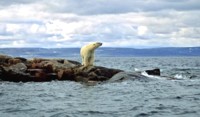
By Laura MacInnis GENEVA – Polar bears and hippos have joined the ranks of species threatened with extinction from climate change, unregulated hunting and other man-made dangers, a leading environmental agency said on Tuesday. The World Conservation Union, or IUCN, said more than 16,000 species of animals and plants were at risk of disappearing, including one in four mammals and one in eight birds.
Stefan Schenker is the new president of the Confederation of European Forest Owners, CEPF. During its General Assembly, CEPF unanimously acclaimed Mister Stefan Schenker as its new president. The internationally recognised expert on forestry has been heading the Austrian association "Land & Forst Betriebe Österreich" up to last year. Since 1995 Stefan Schenker is a member of the CEPF board.
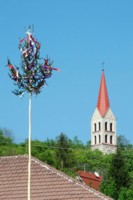
Ancient ceremonies around the Maypole were annual festivals to celebrate the excitement of the coming of spring. Bright flowers springing from the earth would be more exciting if you lived in primitive dwellings as people did over two thousand years ago. Today when a trip to the supermarket yields fresh blossoms any day of the year, there is not as much incentive to gladden our hearts over spring.
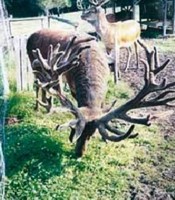
Bulgaria’s impressive game diversity is due to the country’s geographic location and unique natural wealth. Its large forests and mountains are the habitat of the entirety of game species typical of the European-Siberian and Mediterranean zoogeographic regions. These strong and handsome animals are key to the local hunting tourism, which has a long and prominent tradition and is internationally acclaimed.
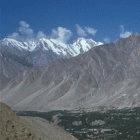
By Aleem Ahmed [ISLAMABAD] Oxygen locked away inside ancient trees shows that human activities have resulted in a dramatic increase in snowfall in northern Pakistan, say researchers. A study published today (27 April) in Nature says the region received more snow in the past century than at any other point during the past thousand years. It points to the onset of industrialisation and rising greenhouse gas emissions as the cause of the trend.
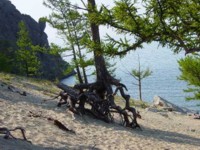
In yet another startling victory for Ecological Internet's network and partners, Russian President Putin has announced the new Siberian/Pacific coast oil pipeline will be routed at least 40 km from Lake Baikal, and outside of the "Jewel of Siberia's" watershed. Lake Baikal is home to 20 percent of the world's fresh water, and is the world's deepest and oldest lake renowned for its water purity and home to tremendous amounts of endemic species including a rare fresh water seal.
Ordinary Swedish deciduous trees could be exploited much more effectively. That is the message by Mr Martin Werner and Mr Lars Rytter at Skogforsk, the Forestry Research Institute of Sweden. They have developed a new web-based support for tending birch, aspen, hybrid aspen and alder.
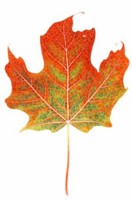
BURLINGTON – In Ohio and New England, and through Canada, the maple sugaring season starts and ends earlier than a generation ago -- a sign of warming climate trends. Rex Marsh, 71, can recall winters so cold no one in northern Vermont ever thought of tapping a sugar maple before town meeting day on the first Tuesday of March.
History of Forestry History of forestry is the story of the forest, man and society in Hungary the story began with the formation of forests, just like anywhere else. Forests of the Carpathian Basin have been formed gradually in the last 12-10 thousand years, parallel to the warming of the climate following the late Würm-period of the ice-age that iced Northern and Central-Europe in the Quaternary age of the Earth. According to reconstruction of botanists and natural geographic scientists 5 thousand years ago the majority of the Carpathian Basin was covered with forests.
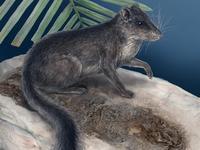
Laonastes aenigmamus Frogs and lots of them are being discovered in the Southeast Asia nation of Lao PDR, according to the Bronx Zoo-based Wildlife Conservation Society, which says that six new frog species have been found by scientists over a two-year period.
Benedek Jávor – László Gálhidy Hungarian forests: ecology and conservation, February 2005 Published by FERN, February 2005. FERN: 1c Fosseway Business Centre, Stratford Road, Moreton-in-Marsh GL56 9NQ, United Kingdom. Tel: 00-44- 1608 652895. Fax: 00-44-1608 652878. Email: info@fern.org Web: www.fern.org
More than 80 per cent of the production forest in Norway is personally owned and family forestry is the dominating type of forest ownership with an average size of 60 hectares. The whole forest area in Norway is certified under the PEFC scheme. 80 per cent of the annual cut is harvested and sold through the forest owners co-operatives in the Norwegian forest owners’ federation.
Smuggling is driving many species of falcon towards extinction in an illicit market where prized birds can sell for a million dollars each, an expert said on Thursday. The black market in birds of prey, centred around the Middle East and Central Asia, can yield bigger profits than selling drugs or weapons, according to the US-based Union for the Conservation of Raptors (UCR).
Dear Colleagues, A Summer Course on climate change and climate protection of the (European) continent and its southern region will be held in Sopron, from September 4th to 8th, organized by the Cooperation Research Centre for Environmental Resources Management and Protection at University of West Hungary (NYME) and by the Regional University Knowledge Centre for Forest and Wood Utilisation and Institute of Environmental Sciences of University of West Hungary.
Still, lowest forest area per person in the world Bangkok, New Delhi, Rome – The Asia-Pacific region recorded the highest rate of forest plantation in the world, over the past five years, according to data released by FAO today. This helped the region reverse the 1990s’ trend of net loss of forest cover into a net gain during the period from 2000 to 2005, FAO said in advance of a gathering of key forestry officials in Dehradun, India, 17 to 21 April.
Tropical Forests and Climate Change Adaptation (TroFCCA) is offering PhD and Master fellowships for its West African chapter. The fellowships are available for a period of 12 to 24 months and are directed at developing research specific to TroFCCA's activities in the region, while, at the same time, providing resources for fieldwork and research experience.
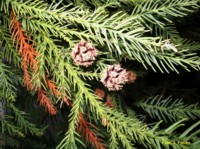
Criptomeria japonica Japan should use more domestically produced wood to help build a recycling-oriented system to utilize forest resources and revive the faltering forestry industry, the Ministry of Agriculture, Forestry and Fisheries said Tuesday in an annual report on forestry. The fiscal 2005 report noted that despite strong expectations on forests as a means to prevent natural disasters and preserve the nation's ecosystem, forestry resources have become degraded due in part to lack of labor force and an insufficient thinning of the forests in various parts of the country.
A warmer climate where diseases, insects and a different growth rate have an impact on forests also requires resources for intensified research. Increased demand for wood and timber will create a need for new methods for accelerating forest growth and for avoiding depletion of our forests.
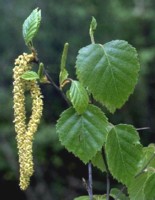
Betula pubescens Depending on the capacity of tree species to adapt to new climatic conditions, climate change and global warming could change the forest landscape worldwide, according to FAO. The territorial range of any given plant species depends to a large extent on temperature and rainfall patterns, and so as climate change alters global temperatures and rainfall patterns a realignment in the distribution of tree species is likely to follow.
The Organization now has 190 Members The Russian Federation has taken up membership of FAO by sending a letter accepting the Constitution of the Organization to Director-General Jacques Diouf more than 60 years after FAO’s foundation.
The plantation timber industry has played down the implications of a recent report which shows for the first time that plantation trees emit a leading greenhouse gas. A report in the international science journal Nature suggests that plantation trees release a small amount of methane into the environment.
MOSBUILD BRINGS TOGETHER SPECIALISTS OF THE INDUSTRY IN EXPOCENTR AND CROCUS EXPO The 12th Moscow International Construction and Interior Exhibition "MosBuild" will take place from the 4th to 7th April 2006 at two exhibition venues: Expocentr and Crocus Expo. This event is organised by ITE, the leader of exhibition business in Russia.

 News
News