Skip to content
News from the world of forests
HU EN
ForestPress — Forestry · Wood industry · Nature · Hunting

News center


2 709 articles

ArchivesPress reviewNewsPress room
News

The future of the furniture industry in an enlarged Europe (europe.eu)

Enterprise Europe, Brussels, 25 February 2005 - The first ever conference on the European furniture industry took place in Brussels today. Participants discussed the key factors influencing the industry and examined strategies that could increase its competitiveness, enhance sustainability and ensure a high level of employment in the long term. They welcomed the new, more sector-oriented approach of EU industrial policy, but stressed that the efforts undertaken by industry need to be matched by improved access to world markets. The innovative capacity of the sector needs to be valorised; measures are needed to encourage the level of research, development and innovation.
News

Kenya's struggle to save forests (BBC News)

By Waihenya Kabiru Nairobi – As more than 100 environment ministers meet in Nairobi, the Kenyan government is under growing pressure to try to conserve the environment as well as provide job opportunities for its people. Nearly five years ago, the government imposed a ban on logging in order to curb deforestation and to conserve the country's major water catchment areas. Despite that the Kenyan government says it remains alarmed at the rate at which the country's forest cover is being depleted. More than 90% of the original national forest cover has now been lost. Environment Minister Kalonzo Musyoka bluntly warns: "Unless we rapidly improve our forest cover and our management we will face a national disaster."

News

California Elks Will Be Sent to Roam Free (AP)

By Juliana Barbassa LOS BANOS, Calif. — Dozens of tule elk will be sent to areas where they can roam freely, from the northern Coast Ranges to the southern Sierra Nevada, in an attempt to restore a native California species that has rebounded from the brink of extinction. "We were down to an Adam and an Eve, for all we know," said Jon Fischer, head of the elk capture project for the California Department of Fish and Game. "This has been a real success story." State and federal wildlife officials captured about 35 elk Wednesday from the San Luis National Wildlife Refuge, a fenced-in range that is surrounded by farm land about 80 miles northwest of Fresno. The animals will be moved through Thursday.

News

Storm felled timber may be of help to tsunami victims (BBC News)

Environment conservation organizations call on the Swedish Government to send storm felled timber to Indonesia. Three million cubic meters of sawn timber are needed for building new houses for the population of the Aceh province, severely hit by the tsunami. After the tsunami catastrophe the population is living in temporary camps and more than half a million new houses are needed. The need for reconstruction is practically unlimited.

News

Forest machines cut 85 % of fellings in Norway (ForestPress)

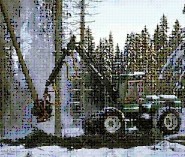
Preliminary figures from the enquiry of agriculture made by the Norwegian Central Bureau of Statistics in 2004 indicate that the degree of mechanization in Norwegian forestry has almost reached 90 % and that private enterprises do the felling. Mechanization has increased rapidly. In 1999 forest machines felled 67 % of all timber and now the figure has increased to 85 %.

News

Kaziranga's centenary celebrations (BBC News)

By Subir Bhaumik Two Britons were the centre of attention at the centenary celebrations of the Kaziranga National Park in India's Assam state, home to a wide variety of endangered wildlife. The centenary celebrations began with the opening of several fairs and exhibitions that were followed by seminars on conservation. Guest of Honour for the occasion was Lord Ravensdale, grandson of British Viceroy Lord George Nathaniel Curzon, the man behind Bengal's first partition in 1905. The viceroy's American-born wife, Mary Curzon, was a great wildlife enthusiast and pushed his officials to declare Kaziranga a forestry reserve in 1905. Later it was upgraded to a game sanctuary and a national wildlife park.

News

EPA recognises Australian greenhouse breakthrough (The Age)

Byline: Garry Barker Australian scientists have won a prestigious award from the powerful US Environment Protection Agency for developing a technology that eliminates the use of the world's most harmful greenhouse gas. The lethal gas, sulphur hexafluoride, or SF6, is used in making magnesium die-castings, increasingly important in the automotive industry, mobile phone manufacture and many other applications requiring strength and low weight.

News

Japan, home of Kyoto Protocol, to start jet parties in the sky (AFP)

TOKYO – It will soon be possible to party in the air over Tokyo Bay in chartered jetliners, a novelty launched just after 141 countries pledged environmental responsibility under the Kyoto Protocol reached in Japan. For a group tab of 7.5 million yen (71,500 dollars), up to 290 people can enjoy an hour over Tokyo Bay in a Boeing 767 or Airbus A300 followed by a banquet at the elite Hotel Nikko Tokyo. Japan Airlines said it would offer the pleasure flights for events such as product launches or school reunions and that it could provide company or school songs in the cabin and special logos on the headrest covers. The novelty flights, billed as the first of their kind in Japan, were announced Thursday, a day after the Kyoto Protocol went into effect in a bid to stop emissions that are causing global warming. The UN Intergovernmental Panel on Climate Change has warned that aviation posed a growing risk to the global atmosphere.

News

Brazil creates environmental haven in violence-torn north (AFP)

Dorothy Stang, BRAZILIA – President Luiz Inacia Lula da Silva has created a national park and an environmental reserve the combined size of Austria in northern Brazil, after a violent dispute over land ownership this past week claimed four lives, including that of an elderly US-born nun. Environment Minister Marina Silva announced the presidential decree on Thursday, saying it was the government's response to the murder Saturday of sister Dorothy Stang, 74, in Para state where she was fighting for landless peasants and against land poachers. "There will be no backsliding in the government's environmental and land reclaiming policies," she told reporters. "We cannot give in to the logic of those who seek to intimidate the government." The decree sets aside 8.2 million hectares (20.3 million acres) in a region between the Xingu and Tapajos rivers in Para state, known as "Half-Way Land." Of roughly equal size, one part of the area will become a national park, while the other will be a protected environmental reserve.

News

China's black-necked crane under satellite surveillance (Peoples Daily/ForestPress)

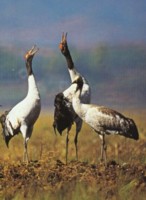
China has launched its first ever observation of black-necked cranes with satellite remote sensing technology in a bid to better protect the rare bird species. The surveillance will be carried out on 10 chosen black-necked cranes spending winter at the Dashanbao Black-Necked Crane National Nature Reserve in southwest China's Yunnan Province over the next three years, according to the provincial forestry administration.

News

Finland and Norway top ranking in environment conservation (nordicforestry/ForestPress)

Finland, Norway and Uruguay are top ranking among 146 countries in the Index of Environmental Sustainability 2005, made by the North American universities Yale and Columbia. North and Middle European and South American countries ranked highest in the 2005 index of environmental sustainability. USA was ranked 45th among the 146 countries measured. Kuwait, Iraq, North Korea and Taiwan were ranked at the very end. The index, that has been made in co-operation with World Economic Forum, ranks countries on the basis of 75 different environmental criteria, for example water and air quality, biodiversity, emissions of climatic gases and of sodium hydroxide (contained in acid rain), over-fishing and co-operation with other countries concerning climatic questions.

News

Forests return but gene pool shrinks (New Scientist)

A TROPICAL forest ravaged by logging can recover, but the new growth will probably be much less genetically diverse. This makes it more vulnerable to threats such as disease and climate change. In many tropical countries, "second-growth" forests now cover a greater area than old-growth forests. Uzay Sezen and his colleagues at the University of Connecticut in Storrs wanted to see how genetically diverse these regenerated patches are. They studied 20 hectares of forest in Costa Rica that was cleared for cattle ranching in the 1960s but has been left to recover since 1978.

News

POLAND: Wolves fear no one after hunting ban (AFP)

Byline: Maja Czarnecka SINCE wolf hunting was banned in Poland more than six years ago, the lives of many livestock rearers in this southeastern town have "turned into a nightmare". "Last year, wolves took 26 of our sheep," Grazyna and Antoni Dydak told AFP at their farm in the Bieszczady hills, tucked away in an unspoilt corner of the central European country. In the summer, when Grazyna takes her 150-head herd of sheep out to pasture, she carries with her fireworks, binoculars and whistles, along with the traditional shepherd's staff and two sheepdogs. But even that is not enough to deter the wolves from attacking.

News

Oak Now the Official U.S. National Tree (ForestPress)

Congress Passes the Legislation Nearly Five years after being voted the United States' favorite tree, recent Congressional passage and presidential signing of an historic bill makes it official - America's National Tree is the Oak. "Having oak as our National Tree is in keeping with the wishes of the hundreds of thousands of people who helped choose this striking symbol of our nation’s great strength," said John Rosenow, president of The National Arbor Day Foundation.

News

Kyoto Protocol comes into force (ForestPress)

The Kyoto Protocol, which aims to slow global warming, has come into force seven years after being agreed. Some 141 countries - who account for about 55% of greenhouse gas emissions - have ratified the treaty, which pledges to cut these emissions by 5.2% by 2012. However, the US and Australia have abstained for economic reasons, and developing countries such as China and India are outside its framework. Kyoto, in Japan, is hosting the main ceremony to mark the occasion. The treaty has come into force 90 days after Russia's crucial decision to ratify it in November 2004.

News

Trees That Make America's Least Wanted List (about.forestry/ForestPress)

What is an Invasive Exotic? There are hundreds of species of flora and fauna known to be harmful when introduced beyond their natural ranges. Seven trees in the United States are considered invasive and listed as an alien exotic pest. According to Invasive.org , "any species, including its seeds, eggs, spores, or other biological material capable of propagating that species, that is not native to that ecosystem; and whose introduction does or is likely to cause economic or environmental harm or harm to human health" should be considered an invasive. Not every tree you plant is desirable and can actually be harmful to a particular location.

News

Coming soon to a sea near you: biggest wind farm in the world (The Scotsman)

By MICHAEL BLACKLEY PLANS are being drawn up to build the world’s biggest wind farm in the North Sea at a cost of ?1.2 billion. Irish firm Airtricity, which aims to become one of the leaders in renewable energy production in the UK, wants to put up about 5,000 turbines that would produce more than 10,000 megawatts of electricity. It is believed the plan could pay back the development costs within about six years. The scheme would be a major boost to the Scottish Executive’s target of generating 18 per cent of Scotland’s power from renewable sources by 2010, rising to 40 per cent by 2020.

News

In pictures: Your changing world (BBC News)

In pictures: Your changing world (BBC News) Environmental change is happening on our doorsteps. We asked BBC News website readers to send us images of how these changes are affecting their lives.

Our partners