 Who is who?
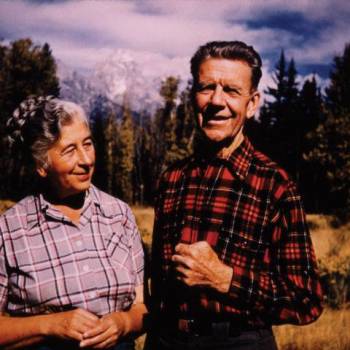
 Murie, Olaus Johan (1889-1963)
Murie - Forester, Wildlife biologist, Author - was born on March 1, 1889, in Moorhead, Minnesota (United States of America), the child of Norwegian immigrants.
6 articles
Who is who? Murie - Forester, Wildlife biologist, Author - was born on March 1, 1889, in Moorhead, Minnesota (United States of America), the child of Norwegian immigrants.
 Who is who?
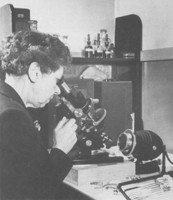
 Canada's First Woman Timber Pathologist An original tree hugger Clara Fritz was nontraditional. She was equally at home in the woods or in the laboratory. But it was her love of trees that led her into her career studying tree diseases as Canada's first woman timber pathologist.
Jozsef Bodig, 73, passed away Sept. 12, 2007, at his residence. In Fort Collins. CO, USA He was born in Gonc, Hungary, on Jan. 20, 1934. He spent his younger years in Gonc before working as a pattern maker in a steel mill in Diosgyor. He finished high school in an accelerated program and enrolled at the University of Sopron in a forest engineering program.
In Memory of Dr. Bela Sivak 1935 - 2005 Bela was born on May 26, 1935, in Panyok, (NE. Hungary) close to the southern border of the present Slovakian Republic. His father was a poor farmer on 10 acres of rolling agricultural land. In comparison, prince Eszterhazy, a Hungarian aristocrat owned 400.000 acres (this name might be familiar, after the name of a small settlement in Southern Saskatchewan). My late Father-in-Law, an Alberta farmer, used to say that a family needs at least ? section of land to lead a decent life.
 Who is who?
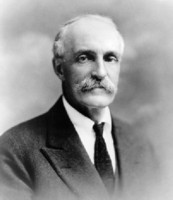
 G. Pinchot born Aug. 11, 1865, Simsbury, Conn., U.S. died Oct. 4, 1946, New York, N.Y. U.S. forestry and conservation pioneer.
 Who is who?
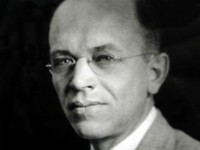
 Aldo Leopold (1887-1948) was an avid angler and perhaps the leading environmentalist of the 20th century. Born in Burlington, Iowa, he earned his master of forestry degree from Yale University in 1909 and immediately entered the Forest Service in the southwestern United States. Leopold saw problems with the theories governing land and wildlife management, eventually leading him to the notion that land ought to be put aside for its recreational and aesthetic values alone. Written in 1933, Leopold's cornerstone book Game Management defined basic skills and techniques, creating a new science that combined forestry, agriculture, biology, zoology, ecology, and education. A Sand County Almanac, a collection of Leopold’s essays published posthumously in 1949, is considered by many one of the basic texts of the modern ecological ethic.