Skip to content
News from the world of forests
HU EN
ForestPress — Forestry · Wood industry · Nature · Hunting

News from the world of forests

Latest news

News

EU proposes inspection of Indonesia plywood exports (The Jakarta Post)

The European Union is proposing a collaborative scheme with the Indonesian government to allow its members to inspect wood-based imports from Indonesia, such as plywood and wood panels, as part of the EU's efforts to help the country curb illegal logging. "We hope that we can arrive at an agreement on the matter with the Indonesian government by the end of this year or early next year," the EU's natural resources program manager for Indonesia, Vernon Copeland, told The Jakarta Post on the sidelines of a workshop on illegal logging organized by the Forestry Ministry on Wednesday. Forestry Minister Malam Sambat Kaban, in a speech to the workshop, urged the European Union to bar its members from importing illegally felled timber.
Who is who?

Dr. Bela Sivak (1935 - 2005)

In Memory of Dr. Bela Sivak 1935 - 2005 Bela was born on May 26, 1935, in Panyok, (NE. Hungary) close to the southern border of the present Slovakian Republic. His father was a poor farmer on 10 acres of rolling agricultural land. In comparison, prince Eszterhazy, a Hungarian aristocrat owned 400.000 acres (this name might be familiar, after the name of a small settlement in Southern Saskatchewan). My late Father-in-Law, an Alberta farmer, used to say that a family needs at least ? section of land to lead a decent life.

News

Connection between Forestry Education Programs in Hungary and UBC (ForestPress)

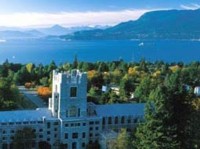
Connection between Forestry Education Programs in Hungary and British Columbia Continues Nearly fifty years ago, a significant portion of the students and professors of the Sopron Forestry School (now University of West-Hungary (UWH)) left Hungary because of the political situation there after the 1956 uprising. Looking for a place to continue their education while stationed in Austria, the University of British Columbia (UBC) adopted them and gave them a chance to continue their education in their own language. Indeed, this was a unique emigration, unparalleled in history. After the completion of their education, more than 80% of the graduates and their professors found employment in BC and Canada and most of them became proud and productive citizens of their new country.

News

Yes, Money Grows On Trees (The Daily Monitor/Allafrica)

By Berhe W. Aregay Addis Ababa – A good number of countries, perhaps because they can afford other forms of energy other than that from fuel wood, see the importance of forests more in terms of the role they play in helping keep the countryside unspoiled. That in itself is, of course, a worthy characteristics of forests that even energy- challenged countries could perhaps appreciate and make their own.

Acta Silvatica & Lignaira Hungarica

Contents

Acta Silvatica & Lignaria Hungarica 2005 Volume 1.

News

Farmers, Others Sue USDA over Monsanto GMO Alfalfa (Reuters)

By Carey Gillam KANSAS CITY, Mo. — A coalition of farmers, consumers and environmental activists Thursday sued the U.S. government over its approval of a biotech alfalfa that critics say will spell havoc for farmers and the environment." Opening another front in the battle over genetically modified crops, the lawsuit contends that the U.S. Department of Agriculture improperly is allowing Monsanto Co. to sell an herbicide-resistant alfalfa seed while failing to analyze the public health, environmental, and economic consequences of that action.

News

THE POTENTIAL ROLE OF A VOLUNTARY INSTRUMENT ON ALL TYPES OF FORESTS (ForestPress)

Background paper for the Country-Led Initiative in Support of the UNFF “Scoping for a future agreement on forests” Berlin, Germany 16-18 November 2005. by Richard G. Tarasofsky Head, Energy, Environment and Development Programme Chatham House Lauren Flejzor PhD. Candidate, London School of Economics and Political Science Executive Summary This background paper aims to inform the discussions at the Country Led Initiative in Support of the UN Forum on Forests (UNFF) “Scoping for a future agreement on forests”, in Berlin, Germany, 16-18 November 2005.

Archives

THE POTENTIAL ROLE OF A VOLUNTARY INSTRUMENT ON ALL TYPES OF FORESTS

Background paper for the Country-Led Initiative in Support of the UNFF “Scoping for a future agreement on forests” Berlin, Germany 16-18 November 2005. by Richard G. Tarasofsky Head, Energy, Environment and Development Programme Chatham House Lauren Flejzor PhD. Candidate, London School of Economics and Political Science Energy, Environment and Development Programme Chatham House 10 St James Square, London SW1Y 4LE, UK www.chathamhouse.org.uk/eedp eedp@chathamhouse.org.uk © Royal Institute of International Affairs 2005 This material is offered free of charge for personal and non-commercial use, provided the source is acknowledged. For commercial or any other use, prior written permission must be obtained from the Royal Institute of International Affairs. In no case may this material be altered, sold or rented. Credit: © Royal Institute of International Affairs 2005 Executive Summary This background paper aims to inform the discussions at the Country Led Initiative in Support of the UN Forum on Forests (UNFF) “Scoping for a future agreement on forests”, in Berlin, Germany, 16-18 November 2005. The paper surveys and analyses various non-binding “soft law” instruments in the internati

News

WTO ruling on biotech crops: Forum Position (ForestPress)

The World Trade Organisation (WTO) has issued their findings on the trade dispute over biotech crops. This case was brought forward by the US, Canada and Argentina against the European Union. The complainants have also been supported by a number of other countries including Australia, Brazil, Chile, China, Chinese Taipei, Colombia, El Salvador, Honduras, Mexico, New Zealand, Norway, Paraguay, Peru, Thailand, Uruguay. The case was not brought forward by the biotechnology industry.

News

Timber line at its highest in thousands of years (Nordic)

We are supposed to be heading for another Ice Age. But during the latest 100 years the timber line in the fells has been creeping upwards. Surely this is a sign that we are headed towards a warmer climate instead. We have to go back some 6000 or 7000 years to find an equally high timber line. Presumably the climate is also warmer now than it has been for 7000 years.

News

The Timber Structure Handbook (Nordic)

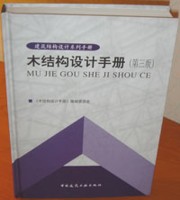
China published and on market The comprehensive 600 pages Timber Structure Handbook, fully adapted to China market, was published and distributed to book stores in December 2005. The Handbook comprises modern wood structure technology, like wood frame construction and hybrid construction (combination of wood frame and concrete structure) and timber grading standards including machine and visually grading of European species and more.

News

Forest Investment Attractiveness Index (ForestPress)

United Nations Forum on Forests – Sixth Session UN Headquarters, New York, N.Y. , U.S.A. Room 5, 1-3pm, February 20th, 2006 The Forest Investment Attractiveness Index (IAIF, from its Spanish name) is a new instrument that has the general objective of measuring the business climate for investments in sustainable forest businesses. It allows the systematic, periodic, quantitative and more rigorous analyses of the factors that affect the success of forest direct investments and business decision-making.

News

In public opinion the moose population is too big (Nordic)

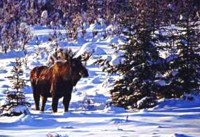
In a poll conducted by the Finnish Forest Research Institute people want the moose population to be reduced. One third of those replying think that the moose population should be at least 20 per cent smaller than in the spring of 2004. The main reason for wanting to reduce the moose population is the traffic hazard. Another reason is the large damage they are causing to the young forest stands in some regions. About on fourth of those replying thought that on national level its size is appropriate.

News

Warm winters may produce less CO2 (nature.com)

By Alan Cane Scientists at the University of Colorado have uncovered a new example of the way the Earth, left to its own devices, maintains an equilibrium between itself and climatic conditions. The Earth as a self-regulatory organism is the central idea of James Lovelock's Gaia theory that is gathering credibility with environmental experts.

News

Landmark event (ForestPress)

Febr. 9- 12 Verona Bioenergy World 2006 creates the first truly international gathering point for the bioenergy industry and signals a step-change for the sector. Set within the highly relevant context of Fieragricola (see below ‘the right place - Fieragricola’), it provides a unique platform for the industry to showcase its modern bioenergy solutions to a diverse community of stakeholders including the agricultural, forestry, energy and environment sectors, planners and land managers, industry and technologists, consumers, governments, bi- and multi-lateral agencies, development agencies, energy utilities and distributors, policy makers, financiers and business investors.

News

Feds move to protect polar bears (Associated Press)

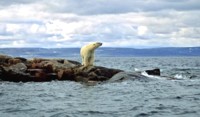
DAN JOLING ANCHORAGE, Alaska - Amid concerns that global warming is melting away the icy habitats where polar bears live, the federal government is reviewing whether they should be considered a threatened species. The U.S. Fish and Wildlife Service said Tuesday that protection may be warranted under the Endangered Species Act, and began a review process to consider if the bears should be listed.

Our partners